
Attack Surface Minimization: From Defensive Principle to Operating Practice (even in the age of AI)
How to expose fewer capabilities, restrict the ones that remain, and prove the difference from an attacker’s point of view
If a capability did not have to exist or be reachable, why are we defending it? The argument is broader than closing ports. Public code and documentation, old APIs, cloud permissions, supplier integrations, and neglected services can all help an adversary find a route to something valuable. Automation may make investigating these routes cheaper, but an organization does not need to accept every prediction about agentic attacks to benefit from reducing unnecessary exposure. The practical response is to make fewer paths available, make necessary paths narrower, and shorten the time between an unwanted exposure appearing and its removal.
Agentic offensive frameworks: signal, noise, and the right response
Recent reporting describes adversarial use of agentic offensive frameworks (AOFs), including ARTEX and PentAGI, in real intrusions. The publicly accessible offensive.agency tracker displayed 5,485 distinct active IPs in its seven-day window when checked on 25 November 2026; that is a dated observation of publicly reachable framework consoles and APIs, not a count of active attackers, attacks against any particular organization, or independent operators. The tracker itself notes probable as well as confirmed identifications, shared CDN IPs, changing cloud-IP ownership, and that researchers, students, authorized testers, and criminals can all operate these tools. Its counts can rise or fall as scanning coverage and deployments change.
Does that justify racing to block every listed IP? Generally, no. Such lists can support short-lived, corroborated blocks during an active incident, or rate-limiting and investigation after suspicious requests. As a standing primary strategy they are fragile: public consoles need not be the egress addresses from which requests arrive; cloud addresses can be reassigned; proxies and shared CDN fronts can implicate unrelated users; and an operator can change infrastructure. Do not equate a source-IP match, a framework fingerprint, or a burst of probes with a successful compromise. Inspect the sequence instead: Was the request denied? Did authentication succeed? Did the same identity then enumerate permissions, change configuration, access sensitive data, or move to a different service? Keep WAF, IPS, and application controls tuned for known abuse, but validate coverage rather than assuming they will block every valid-credential or business-logic path.
There is a sound reason not to panic and an equally sound reason not to dismiss the trend. In observed cases, these frameworks often rely on iterative, forensically noisy attempts; most PentAGI activity in one reported sample remained at discovery or scanning. Yet some operations progressed to intrusion, and valid credentials or weakly bounded application capabilities can turn noisy exploration into a rapid attack path. Their apparent “creativity” is uneven and currently limited in many deployments, not a dependable defensive boundary. The practical judgment is medium confidence: behavior-focused detection and faster exposure reduction will usually provide more lasting value than indiscriminately blocking a changing list of framework-associated addresses; an identified, ongoing attack can still warrant a narrowly scoped temporary block alongside credential/session containment.
This is not a call to disconnect the business. It is a way to distinguish reachability from necessity. A public catalog must be public; its database administrator console does not. A supplier may need to upload an invoice; that does not mean the supplier needs an account on the internal finance application. A camera may need to send video to a recorder; it does not necessarily need to accept connections from the internet or contact arbitrary destinations.
What is the attack surface?
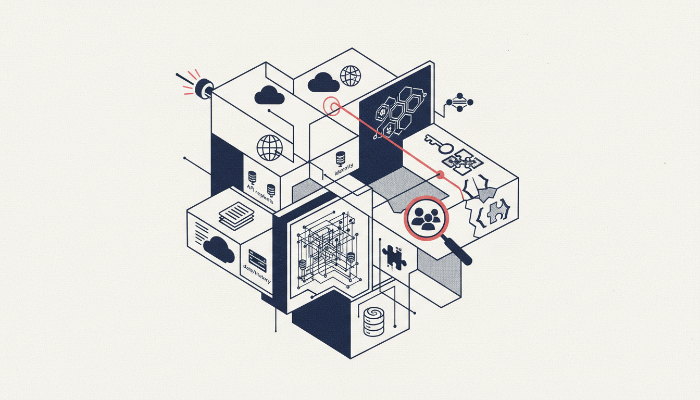
An attack surface is the collection of reachable entry points and usable relationships through which an adversary could interact with, influence, or move through an environment. It has several dimensions:
- External: public websites, APIs, VPN portals, remote-management interfaces, mail and identity services, cloud storage, IPv6 addresses, and third-party-hosted endpoints.
- Internal: management networks, administrative protocols, database listeners, east–west application traffic, and trust between tenants, sites, or environments.
- Identity and authorization: human accounts, service principals, API keys, standing administrator privileges, shared credentials, and delegated vendor access.
- Software and supply chain: installed packages, CMS plugins, build pipelines, browser extensions, exposed repositories, and update channels.
- Data and history: published secrets, archived site content, old build logs, stale DNS records, test environments, and backups left in web roots.
The key distinction is between removing a capability and merely hiding it. Changing a URL, renaming an administrator account, or relying on an unpublished hostname is not equivalent to disabling the endpoint or enforcing access before the request reaches it. Likewise, a firewall that blocks an interface from the internet reduces external reachability but does not make an unsafe service safe for anyone who can reach the internal network.
A useful design test for any new exposure is: Who must use it, from where, for what operation, for how long, and what happens if that access is compromised? If the answers are unclear, defer the exposure rather than leaving it open while documentation catches up.
Make minimization an operating model
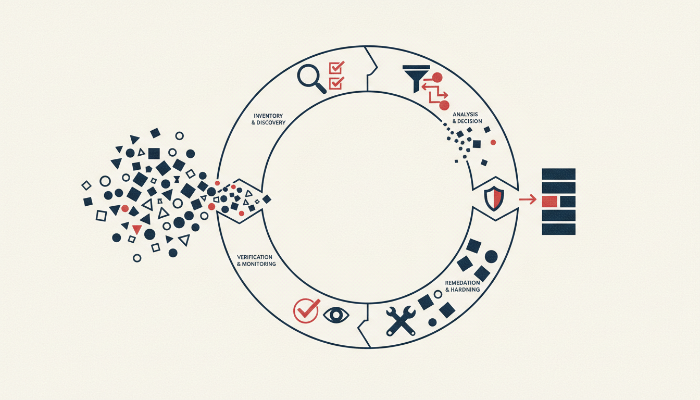
1. Build an inventory from the outside in
Start with the organization’s public IP ranges, domains, certificates, cloud accounts, SaaS tenants, CDN/WAF configurations, and known supplier connections. Compare asset inventories against external observations: DNS and certificate records, authorized internet-facing scans, cloud load balancers, published container services, and approved exposure-discovery services. Include IPv6 and assets hosted by vendors. CISA recommends identifying internet-accessible systems, deciding whether that exposure is necessary, mitigating necessary exposures, and reassessing them routinely. CISA, “Internet Exposure Reduction Guidance”
For each exposure, record at least: owner; business purpose; public hostname/IP; technology and version; data sensitivity; reachable ports and routes; authentication; authorized client population; upstream dependencies; patch/support status; logging; expiry/review date; and tested rollback path. A service without an accountable owner should be treated as a finding, not as a permanent exception.
Scan only address space and services you own or are authorized to assess. Combine external observations with configuration data: cloud security groups may say a port is closed while a forgotten load balancer says otherwise; a reverse proxy may conceal a direct-to-origin route. Check DNS, both IP families, alternate ports, and vendor-controlled paths before declaring an asset private.
External Attack Surface Management: detect change, not just count assets
External Attack Surface Management (EASM) is the continuous discovery, attribution, validation, and remediation of what outsiders can see. A quarterly spreadsheet captures a snapshot; EASM asks what appeared, changed, or disappeared since the last verified snapshot. CISA recommends routine assessments of internet-facing assets and investigation of unexpected open ports, including assets on vendor or legacy infrastructure. CISA, “Internet Exposure Reduction Guidance”
Build a change-detection loop rather than buying a dashboard and assuming the problem is solved:
- Seed and expand scope. Start with approved domains, public IP allocations, cloud subscriptions/projects, certificates, CDN accounts, and known supplier-hosted properties. Discover related subdomains, DNS records, certificates, load balancers, exposed services, and technologies using a combination of internal configuration feeds and authorized external observations. Keep a distinction between confirmed owned, likely related, and unattributed assets; a shared CDN address or similar-looking name is not sufficient evidence of ownership.
- Normalize and compare. Store the first-seen and last-seen times, source and confidence of the observation, IPv4/IPv6 address, hostname, port/protocol, technology fingerprint, TLS certificate, hosting relationship, and approved exposure record. Generate events for a new IP, hostname, port, service, apparent technology/version, certificate, direct-origin path, or return of a retired asset. Treat a scanner’s newly discovered old asset differently from an asset demonstrably created today.
- Validate before escalating. Check DNS and cloud-control-plane records, verify ownership, recheck the service from an approved external vantage point, and compare with an authorized deployment or maintenance window. Fingerprints can misidentify software; CDNs and shared hosting can create false associations. A technology change or open port is a lead to investigate, not proof of a vulnerability.
- Route to a decision owner. Ask whether this exposure is necessary, explicitly approved, properly restricted, within support, and monitored. Classify it as approved, approve after remediation, unnecessary-remove, or not ours/false positive. Give unknown public management interfaces or unsupported critical systems an expedited route to network and incident-response teams; use risk-based review times rather than one universal SLA.
- Remediate and verify externally. Disable or isolate what is unnecessary; constrain legitimate exposures. Recheck externally, including direct-origin access and both IP families where relevant. Preserve the finding, owner, decision, expiry, and proof of closure; alert if the same asset reappears after the next deployment.
For example, if a new hostname resolves to a cloud load balancer and TCP 8443 becomes reachable, EASM should correlate the certificate, cloud resource tags, change ticket, and service owner. If it is a newly approved supplier portal, register and test its intended controls. If it is an unowned appliance management interface, restrict reachability immediately while the network team establishes ownership and need. The success measure is not merely “more assets found,” but time from first external observation to an ownership and necessity decision, and time from decision to verified closure.
EASM complements, not replaces, internal asset inventory, vulnerability management, application testing, or response to suspicious activity. Its distinctive value is discovering exposure drift early enough to prevent a new accidental entry point becoming normal.
2. Apply an explicit decision sequence
For every exposed feature, use the same order of preference:
- Remove: retire an unused system, plugin, account, integration, or protocol.
- Relocate: put an internal-only function on a private network or behind an identity-aware access gateway rather than exposing it directly.
- Constrain: if public access is essential, restrict methods, routes, source networks where feasible, roles, data scopes, and time windows.
- Harden and monitor: patch, enforce strong authentication, log meaningful events, and prepare containment for what remains.
A WAF, MFA prompt, or vulnerability scanner can improve a necessary service, but none should be used to justify an unnecessary public management interface. CISA’s edge-device guidance specifically recommends removing internet-exposed management interfaces or placing a separate zero-trust policy enforcement point in front of them. CISA, “Edge Device Security”
3. Prioritize connected paths, not only isolated findings
An outdated marketing plugin and an overly privileged CI credential should not be evaluated independently if the website’s deployment process can reach production secrets. In reviews, trace plausible paths from a public entry point to privileged identities, sensitive data, and high-impact systems. Prioritize exposures that combine easy reachability, high privilege, unsupported software, sensitive data, or a short path to a critical asset. Use exploit intelligence and severity scores as inputs, not substitutes for architecture. Remove a needless path even if no vulnerability has been reported in its current software version.
The volume of research findings is not the same as the volume of exploitable production exposure. Researchers and automated agents may inspect an entire repository, including tests, dead code, optional features, build-time dependencies, or configurations never deployed to the public service. That can be valuable discovery work, but neither a dramatic headline nor a repository-level finding establishes that an attacker can exercise the vulnerable code in the live environment. Conversely, a finding in a non-public component may still be urgent if it is reachable through a compromised identity, a CI runner, a supplier connection, or a public application’s backend. Prove or disprove the path; do not simply declare the issue irrelevant because its URL is not public.
Use a repeatable triage record for each significant finding:
| Question | Evidence to check | Decision consequence |
| Is the affected version or feature actually deployed? | Production software inventory, image digest, runtime configuration, plugin list | If absent, record a defensible not affected disposition and rescan on deployment changes. |
| Can an attacker reach and trigger it? | External route test, authentication requirements, proxy/WAF rules, network path, feature flags | Reduce public reachability first where feasible; if access is indirect, document the needed preconditions. |
| What can the resulting identity or process do? | Effective IAM and database permissions, secrets available to the workload, outbound paths | Prioritize short routes to sensitive data or control planes. |
| Is exploitation observed or credible now? | CISA KEV, vendor advisory, incident telemetry, exploit evidence, EPSS as a supporting signal, sightings on social media | Escalate credible exploitation; distinguish scanning from confirmed compromise. |
| What is the consequence and what breaks if we act? | Data and business impact, safety dependencies, operational rollback | Select patch, removal, isolation, or monitored temporary mitigation with an owner and review date. |
CISA’s Known Exploited Vulnerabilities catalog records vulnerabilities with reliable evidence of exploitation in the wild and recommends using it as a prioritization input; scanning and a public proof of concept alone are not the same thing. FIRST’s EPSS estimates the probability of exploitation in the next 30 days across the broader ecosystem; it does not answer whether a specific organization runs the affected feature or exposes it to an attacker. Treat CVSS severity, KEV, EPSS, local reachability, and business consequence as complementary inputs rather than collapsing them into a single headline-driven queue. CISA, “Reducing the Significant Risk of Known Exploited Vulnerabilities” FIRST, “Exploit Prediction Scoring System”
A practical disposition is act now for a demonstrably exposed, high-impact path or evidence of active exploitation; schedule with an owner for a deployed but constrained issue; monitor and retest when reachability is uncertain; and close as not affected only with evidence and a re-evaluation trigger. Filtering is not ignoring: it is recording why a finding does or does not create an actionable attack path and reopening it when exposure changes.
4. Prevent exposure from returning
Turn a one-time cleanup into a delivery rule. Require every proposed public listener, route, OAuth grant, supplier account, CMS plugin, or firewall exception to have an owner, justification, least-privilege design, expiry/review date, and external verification plan. Check infrastructure-as-code and deployment manifests before release for public IPs, unrestricted ingress, privileged roles, and services without approved exposure records. Set alerts when cloud or firewall configurations drift from the reviewed baseline. Use time-limited exceptions with explicit renewal rather than permanent “temporary” openings.
Practical controls, by layer
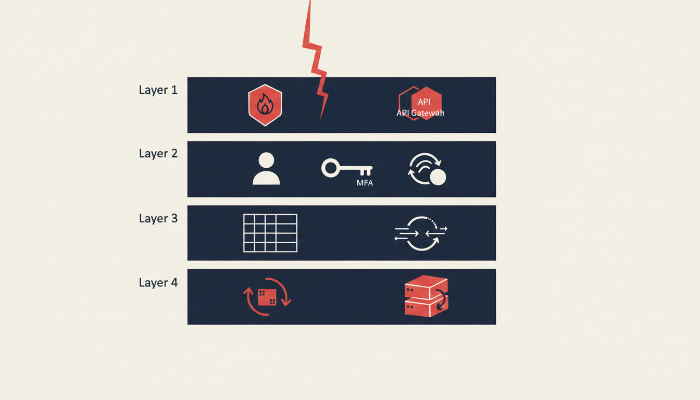
Public entry points
Put public applications behind a deliberately managed ingress layer and allow traffic to the origin only from that layer, using network controls and, where supported, origin authentication such as mutually authenticated TLS. Verify that an attacker cannot bypass the ingress by addressing the origin directly. Avoid publishing staging environments, monitoring dashboards, database consoles, debug endpoints, and backup files. Separate public content from administrative operations; rate-limit authentication attempts, but do not mistake rate limiting for authorization.
A public DNS name is not a security boundary. An IP allowlist is useful for stable administrator or partner egress addresses, but is less suitable for roaming users or third parties with changing IPs; for those cases use a properly designed identity-aware access gateway with phishing-resistant MFA. Review application routes as carefully as ports: /admin, /debug, /actuator, documentation consoles, and old API versions may all ride on the same HTTPS listener.
Identity and privilege
Use individual administrator identities, phishing-resistant MFA where supported, short-lived access, separate break-glass procedures, and just-in-time elevation for sensitive changes. Give each application integration a distinct identity with only the actions and data it needs; rotate or retire unused secrets and revoke sessions when access is removed. Audit delegated SaaS permissions and service principals, not just interactive user accounts. An API with perfect network filtering can still be an easy path if a long-lived token in a build log grants broad access.
Internal network and egress
Segment users, management, production workloads, backups, and IoT/OT devices according to required flows. Start with observed dependencies, then define allow rules for the required source, destination, protocol, and port; deny everything else. Restrict outbound traffic as well as inbound traffic so that a compromised web server cannot reach arbitrary management systems or internet destinations. Plan exceptions for DNS, time sync, patching, and telemetry. Test from both sides: a permitted flow should work, and an unintended flow should fail.
Software lifecycle and recovery
Maintain a list of software versions, support dates, and update owners for exposed products, especially edge appliances and CMS extensions. Patch internet-facing services on a risk-based, accelerated schedule; if a product no longer receives security fixes, isolate and replace it rather than relying indefinitely on compensating controls. Remove unused plugins and features instead of just leaving them unmaintained. Keep configuration backups and test recovery so access can be restricted or a device rebuilt without improvisation during an incident. CISA emphasizes replacing end-of-support edge devices, disabling unnecessary services, centralizing logs, and backing up configurations. CISA, “Edge Device Security”
Configuration patterns for frequently exposed technologies
The following examples are illustrative baselines, not copy-and-paste production policies. Check application dependencies, addresses, proxy topology, supported versions, and recovery access before deployment. Make changes through version control and test both allowed and blocked behavior.
WordPress on NGINX: make administration conditional, not universally reachable
Before writing server rules, remove unused plugins and themes, update the components you keep, give editors and administrators distinct accounts, and require MFA for administrators. WordPress’s own hardening guidance recommends keeping plugins updated, deleting unused ones, limiting access, and disabling the built-in PHP file editor when it is not needed. It also warns that blanket protection of /wp-admin/ can break admin-ajax.php, which some public-facing site features use. WordPress Developer Resources, “Hardening WordPress”
In wp-config.php, where in-dashboard editing is unnecessary:
define('DISALLOW_FILE_EDIT', true);
For an NGINX deployment, these rules belong in the appropriate HTTPS server block before a generic regex PHP handler. The address is an example private administrative network; replace it with an actual trusted gateway/network. If a CDN or reverse proxy is in front, NGINX must be configured to trust forwarded client addresses only from known proxy IPs, or the allowlist will match the proxy instead of the user. A better pattern for roaming staff is to put administration behind an identity-aware gateway and prevent direct origin access.
# Illustrative fragments within the WordPress HTTPS server block.
# Preserve the site's existing PHP-FPM and WordPress routing configuration.
location = /xmlrpc.php {
return 403; # Only if no approved integration needs XML-RPC.
}
location = /wp-login.php {
allow 10.20.30.0/24;
deny all;
# Pass approved requests to the existing PHP-FPM handler here.
# Do not leave this location as a bare allow/deny rule.
}
location ~* ^/wp-content/uploads/.*\.php(?:/|$) {
return 403; # Must precede the generic PHP regex location.
}
These are fragments, not a complete virtual host: the login location needs the site’s normal PHP-FPM handling to keep legitimate login working. Avoid blindly blocking /wp-admin/, REST endpoints, or AJAX when publishing or plugins depend on them. NGINX evaluates allow and deny in order; validate the actual client IP seen at this layer. After changing configuration, run nginx -t, reload safely, confirm legitimate administrator login, and verify that unauthorized external requests to the login and XML-RPC paths are refused. NGINX, `ngx_http_access_module` WordPress Developer Resources, “Hardening WordPress”
Web applications on Kubernetes: isolate a namespace, then open only needed flows
A public ingress does not imply that every pod should talk to every other pod. In a dedicated application namespace, begin with a default-deny policy, then add narrow rules for the workloads that need connectivity. For example:
apiVersion: networking.k8s.io/v1
kind: NetworkPolicy
metadata:
name: default-deny
namespace: shop
spec:
podSelector: {}
policyTypes:
- Ingress
- Egress
---
apiVersion: networking.k8s.io/v1
kind: NetworkPolicy
metadata:
name: permit-ingress-to-web
namespace: shop
spec:
podSelector:
matchLabels:
app: web
policyTypes:
- Ingress
ingress:
- from:
- namespaceSelector:
matchLabels:
kubernetes.io/metadata.name: ingress-system
podSelector:
matchLabels:
app: ingress-controller
ports:
- protocol: TCP
port: 8080
This allows selected ingress-controller pods to reach app: web on port 8080 provided the source-side egress policy also allows it. It does not allow the web pod to reach DNS, an API, or a database; add separately scoped egress and database ingress rules for documented flows. Check labels, namespaces, service ports, cluster DNS, health checks, and the source addresses seen after load-balancer translation. A NetworkPolicy resource has no enforcement effect unless the installed network plugin supports it; Kubernetes also specifies that multiple allow policies combine additively, so a broad pre-existing policy can defeat the intended restriction. Kubernetes, “Network Policies”
Validate the manifests server-side before applying them, then run connectivity tests from a permitted pod and an unrelated pod. Verify public reachability separately: NetworkPolicy is not a substitute for reviewing Kubernetes Service type LoadBalancer, ingress routes, cloud firewall rules, or the Kubernetes API endpoint.
Edge devices: separate the user-facing service from the management plane
For a firewall, router, VPN concentrator, or load balancer, distinguish a service that users must access from the interface used to configure the device. The preferred pattern is a management interface reachable only from a dedicated administrative network or authenticated access gateway, not from the public internet. Disable unused management services such as HTTP, Telnet, or legacy file transfer; allow only the protocols required by operations. Require MFA through the management access layer where supported, named administrator accounts, centralized logging, config-change alerts, and protected backups. Keep firmware within vendor support.
A vendor-neutral policy example:
PUBLIC -> device management IP / GUI / SSH: DENY
ADMIN GATEWAY -> device management IP / HTTPS: ALLOW
ADMIN GATEWAY -> device management IP / SSH: ALLOW only if required
PUBLIC -> approved VPN user portal: ALLOW only if required
DEVICE -> central log collector: ALLOW approved logging flow
ALL OTHER management-plane traffic: DENY
Implement these as management-plane/local-in controls, not only as ordinary transit firewall rules: on many appliances, a rule protecting traffic through the device does not protect traffic to the device. Use vendor-specific hardening documentation and preserve an out-of-band recovery path so a mistaken rule cannot lock out administrators. Test from an external network that the management interface is unreachable while the required user-facing service remains available. CISA recommends removing internet-exposed management interfaces or fronting them with an independent enforcement point and monitoring configuration changes and logs. CISA, “Edge Device Security”
IoT and operational devices: restrict both who can reach them and where they can call home
A camera, sensor, building controller, or industrial gateway rarely needs unrestricted access to corporate workstations or the public internet. Put devices in a separate network, disable default credentials and unused discovery/remote-support features, and define their approved conversations: for example, cameras to the recorder, sensors to the broker, devices to a designated update service, administrators through a jump host. Record firmware support dates and supplier remote-access methods, including cellular connections that may bypass the enterprise firewall.
For a dedicated IoT segment, a policy table is safer than a vendor-specific configuration pasted without context:
| Source | Destination | Service | Decision |
| IoT device subnet | Approved broker or recorder | Only the required application port | Allow |
| IoT device subnet | Approved DNS/time/update services | Only required ports and destinations | Allow if needed |
| Management jump host | Individual device management interface | Approved administration protocol | Allow with strong authentication |
| Internet or corporate user subnet | IoT management interfaces | Any | Deny |
| IoT device subnet | Other internal networks or arbitrary internet destinations | Any | Deny |
If a PLC, HMI, or similar OT system genuinely needs remote support, route it through a centrally managed, monitored access path rather than connecting it directly to the internet. Coordinate changes with operations and suppliers: overly broad network isolation can interrupt safety, telemetry, or maintenance. CISA explicitly recommends centrally managed remote access for OT and warns against direct internet exposure of controllers. CISA, “Internet Exposure Reduction Guidance”
Prove that the reduction worked
A control is not complete when a configuration file is merged. For each change, capture a before-and-after record:
- Externally visible: Does the unwanted hostname, port, route, management interface, or origin still answer from a network outside the organization? Check IPv4 and IPv6 where applicable.
- Legitimate access: Can the authorized user or workload still perform the intended operation through the approved path?
- Lateral movement: Can an unrelated workload, user subnet, or IoT device reach something it should not?
- Privilege: Did the removed account, token, plugin, or supplier integration actually lose effective access, including existing sessions?
- Operational safety: Are DNS, updates, monitoring, backup, and break-glass recovery working after the change?
- Persistence: Will the exposure reappear on the next deployment, infrastructure change, vendor intervention, or certificate renewal?
Choose a few metrics that reward verified reduction, not simply more scanning:
- percentage of internet-facing assets with an owner and necessity review;
- number of unsupported public components; number and age of public management interfaces;
- time from first external observation to ownership decision and verified containment;
- percentage of temporary exceptions that expire on time;
- percentage of new public endpoints seen before versus after deployment approval;
- percentage of high-impact flows covered by a tested deny-by-default policy.
Track trends with a consistent measurement method; a rising asset count can also reflect better discovery rather than worsening security.
For SOC triage, separate blocked background probes from successful access or meaningful follow-on behavior. Correlate WAF/IPS and application logs with identity, cloud control-plane, and data-access telemetry. An alert deserves escalation when scanning is followed by successful authentication, unusual permission checks, a new token or account, administrative API use, unexpected data access, or traffic to an unapproved backend, not merely because a request came from an IP once associated with an AOF. Tune detections against authorized testing and known deployment activity, and keep a fast path to revoke credentials and sessions when activity crosses that threshold. This prioritizes adversary behavior over unstable tool fingerprints; observed AOF intrusions have included valid-credential use and rapid, noisy API sequences.
A realistic rollout
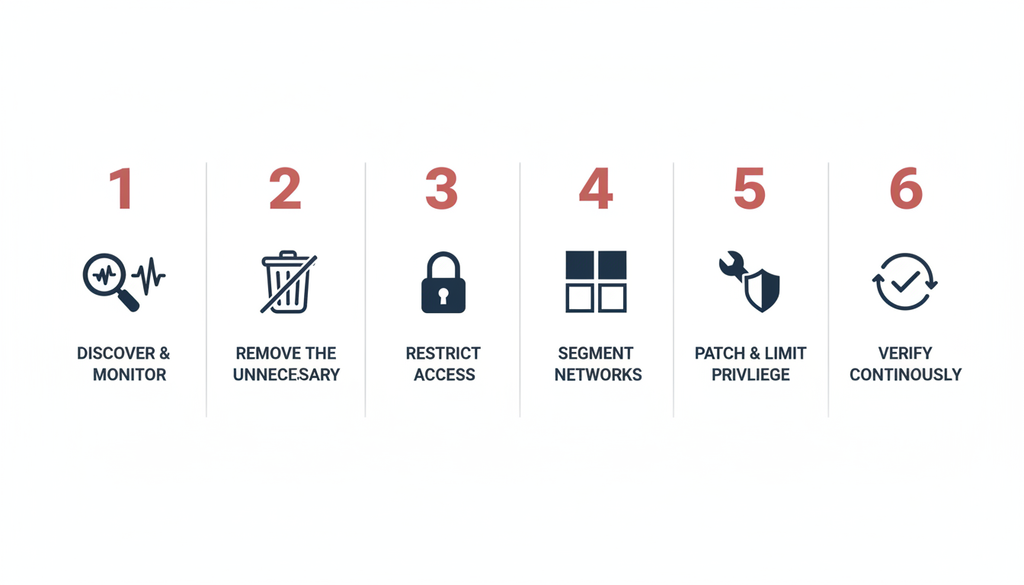
Phase 1: establish visibility and remove obvious exposure. Assign an executive sponsor and technical owners. Seed an EASM baseline with domains, IP ranges, cloud accounts, and approved internet-facing services; reconcile external observations with DNS, cloud, network, and vendor inventories. Identify public management interfaces, unused test systems, unsupported appliances, and obvious origin bypasses. Close or isolate the highest-risk unnecessary entries, with a rollback plan and external verification.
Phase 2: narrow the necessary paths. Put administrative access behind a dedicated authenticated route; reduce supplier and service-account privileges; remove unused CMS extensions; define the first application and IoT network allowlists; speed up patching for essential internet-facing systems. Start triaging EASM changes (new hostnames, IPs, ports, certificates, and technologies) with owners and evidence of necessity. Test every exception with an owner and review date.
Phase 3: make it repeatable. Add exposure checks to change approval and CI/CD; compare observed reachability with the approved registry; alert on new public listeners and privilege grants; establish recurring EASM change reviews and verify closed findings from an external vantage point. Rehearse rapid isolation and recovery for an edge device and a critical web service. Review the metrics and update standards based on operational failures, not just successful changes.
AOFs are accelerators, not skeleton keys
It is easy to imagine an AOF (agentic offensive framework) as a machine into which someone types a URL or IP address and receives a working exploit. That is the wrong expectation. The framework can enumerate, combine existing tools, interpret responses, and try alternative paths, but it still needs an exploitable condition, usable credentials, an unsafe capability, or a gap in how controls are configured and enforced. A public address alone does not create one. The techniques observed in real intrusions largely involve familiar problems (exposed interfaces, excessive privileges, weak segmentation, and stolen credentials) pursued at greater speed and scale.
Well-designed controls still matter. If an administrative interface is genuinely unreachable from the attacker’s position, an identity cannot perform the desired operation, or segmentation blocks the next hop, an AOF cannot simply wish away that restriction. An IPS, WAF, or CMS security plugin may also stop known probes. But no individual product, or collection of products, should be described as impossible to bypass: coverage depends on configuration, the specific attack path, and whether an adversary gains a different vantage point or valid access. The defensible objective is to enforce independent boundaries, test them from relevant locations, and limit the impact of any boundary that fails.
Autonomous exploration can also surface vulnerabilities and combinations that time-constrained researchers had not yet investigated. Finding an overlooked path is not the same as inventing a new exploitation technique. Nor does every reported discovery translate into a reachable production weakness: confirm that the affected code is deployed, the entry point is accessible under realistic conditions, and the necessary privileges and downstream connections exist. We should not assert that AOFs alone explain any broader surge in vulnerability disclosures without a defined dataset and attribution method. What the available incident reporting supports is narrower: these tools can accelerate the discovery and chaining of weaknesses, while often producing noisy failures along the way.
The takeaway is neither complacency nor a race to buy a new defensive product: make existing boundaries real, remove paths that are not needed, and continuously verify what an external observer can actually reach.
The lasting test
Minimization is not the pursuit of the smallest possible number of servers or ports. It is the pursuit of the smallest justified set of capabilities and connections, with strong controls and evidence for what remains. Every unnecessary feature removed is a future patch, alert, permission, and incident path the organization no longer has to manage. The question to ask at each architecture review is simple: If we were building this service today, would we expose this capability to this audience in this way?

Massimo Giaimo
Author
