22. 05. 2026
AI, NetEye, Unified Monitoring

22. 06. 2015
Tobias Goller
NetEye
Wachsende Popularität: Das automatische Shutdown Management in NetEye
Das neue Shutdown Management Tool, welches seit dem Release von NetEye 3.5 zur Verfügung steht, erfreut sich wachsender Beliebtheit. Das Tool ermöglicht den Start eines automatisierten, sequentiellen Shutdown Prozesses, im Fall des Überschreitens eines vorab definierten Schwellwerts.
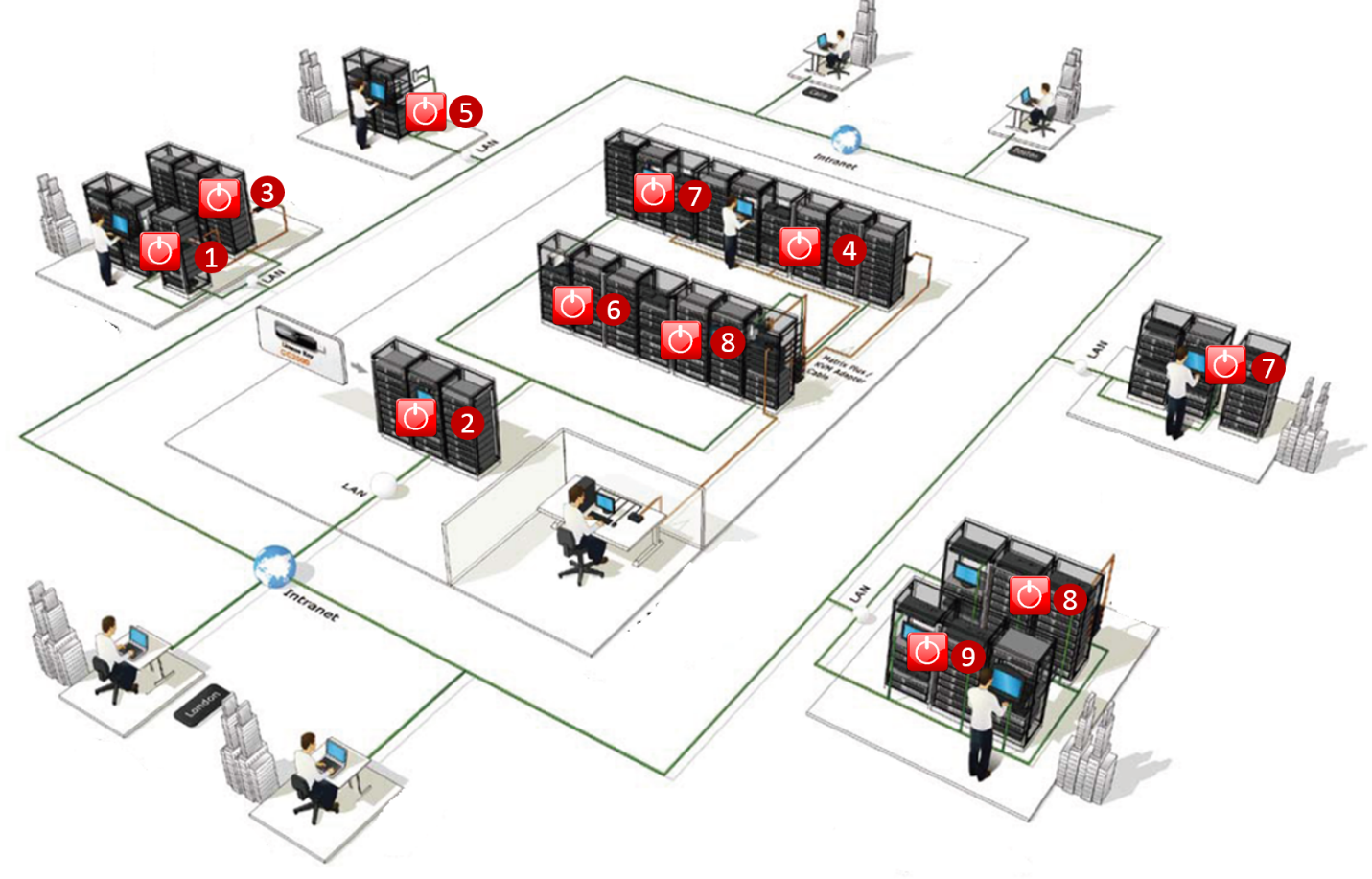
Das Auslösen der Shutdown-Abfolge kann durch die Verwendung bereits bestehender NetEye-Umgebungskontrollen erfolgen. Die erforderlichen Daten können beispielsweise durch Temperatur-, Feuchtigkeits-, Rauch- oder Wassersensoren ermittelt werden.
Das neue Shutdown Management Tool kann mit den unterschiedlichsten Systemen interagieren. In den vergangenen Wochen habe ich automatisierte Shutdown-Abfolgen bei verschiedenen Kunden implementiert. Darunter waren sowohl der Shutdown von Windows, als auch von Linux Systemen. Das Modul ist auch in der Lage, virtuelle Maschinen einer VMware ESX Infrastruktur und am Ende der Prozedur, sich selbst herunterzufahren. Natürlich gibt es immer wieder besondere Anforderungen, wie z.B. das Herunterfahren von Speichersystemen oder Firewalls. In solchen Fällen, habe ich die Schnittstellen des Shutdown Management Tools benutzt, um EMC, IBM und HP Speichersysteme und verschiedenen Firewalls der Shutdown Prozedur hinzuzufügen.
Außerdem bietet das neue Modul die Möglichkeit individuelle Einstellungen in Hinsicht auf die Shutdown-Reihenfolge und eventuelle Wartezeiten zu definieren.
Interessant ist auch die Möglichkeit zur Aktivierung eines Shutdown Buttons im Shutdown Management Tool.
All dies hat den großen Vorteil, dass im Fall eines notwendigen Shutdowns, kein System Administrator physisch anwesend sein muss. Der vordefinierte Prozess kann vollautomatisch gestartet werden.

Tobias Goller
NetEye Solution Architect at Würth IT Italy
I started my professional career as a system administrator.
Over the years, my area of responsibility changed from administrative work to the architectural planning of systems.
During my activities at Würth IT Italy, the focus of my area of responsibility changed to the installation and consulting of the IT system management solution WÜRTHPHOENIX NetEye.
In the meantime, I take care of the implementation and planning of customer projects in the area of our unified monitoring solution.
Author

Latest posts by Tobias Goller
16. 02. 2026
Unified Monitoring
OpenShift Monitoring in NetEye
13. 10. 2025
Log-SIEM, Unified Monitoring
Elastic Defend: Experiences
18. 07. 2025
Automation, Cloud
Running SOS Berlin JobScheduler in Containers: A Step Toward Cloud-Native Scheduling
16. 04. 2025
NetEye, Unified Monitoring
Application Performance Monitoring in NetEye with Elastic APM and OpenTelemetry