29. 09. 2026
Blue Team, Machine Learning

We recently integrated two dashboards into NetEye SIEM to check what is happening within Active Directory, a component that is present in the vast majority of our customer environments.
These two dashboards start from the collection of security events that are gathered across the various Windows servers that make up the infrastructure, and are then directed to NetEye SIEM.
Among these servers there are obviously also the domain controllers that track the changes that are made to the users and groups that make up an Active Directory.
This information is very important for security as it allows us at any time to check what risks and threats may be ongoing in our Active Directory.
There are many attacks that start by leveraging the elevation of a user to administrator level and then placing that user in the administrators group, or by creating a new administrative user for malicious purposes, or even by resetting a user’s password to take possession of their account. With this new dashboard we can have everything under control. Here’s a preview:
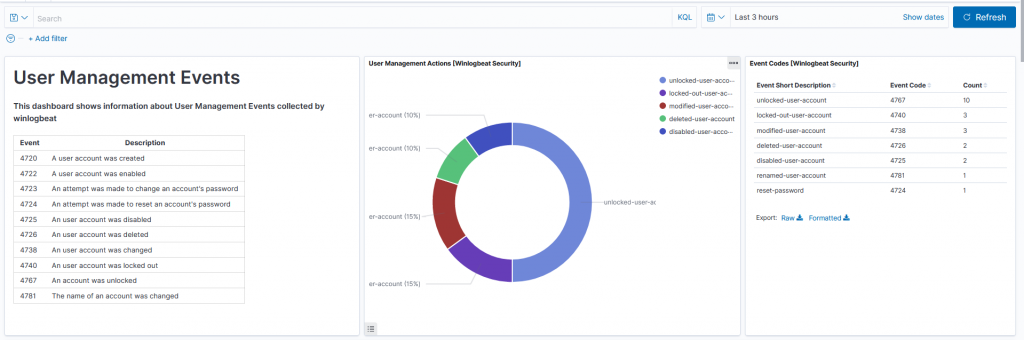
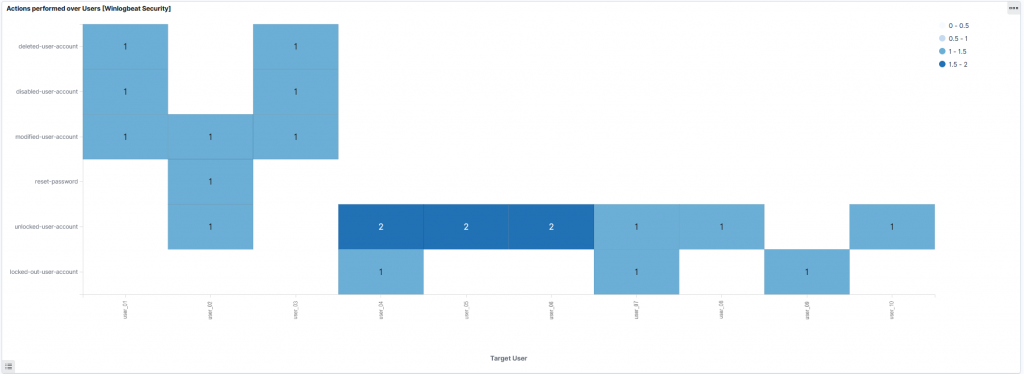
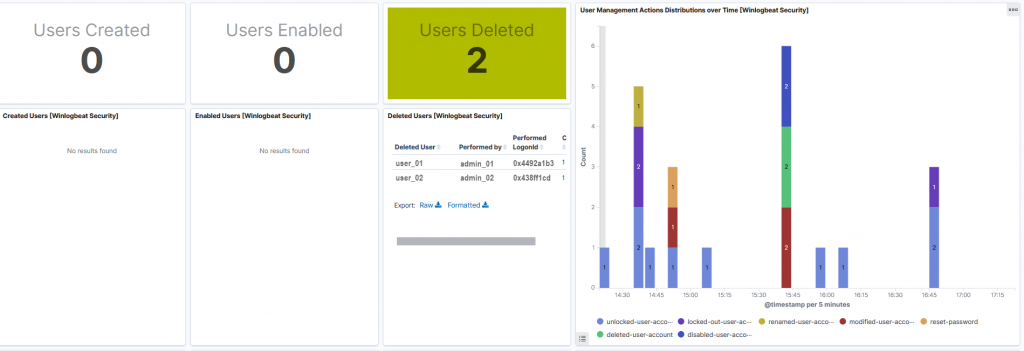
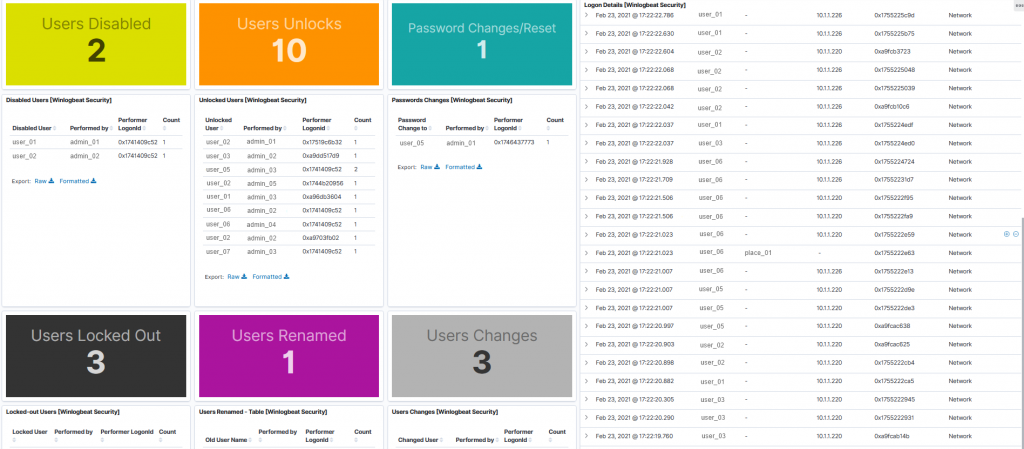

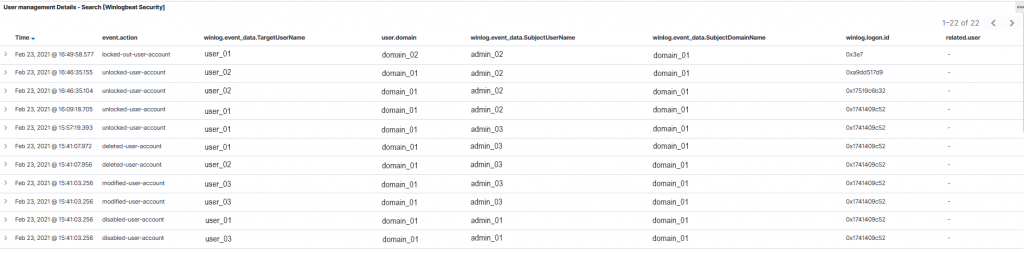
As you can see, we collect information related to the following security KPIs
- Users Created
- Users Enabled
- Users Deleted
- Disabled Users
- Users Unlocks
- Password Changes / Reset
- Users Locked Out
- Users Renamed
- Users Changes
If you’d like to have this dashboard, just ask us – the only prerequisite is that you have the Windows events already collected from your windows server.
The same goes for this second dashboard that keeps everything related to groups under control, which is also very useful for the same reasons as the dashboard above.
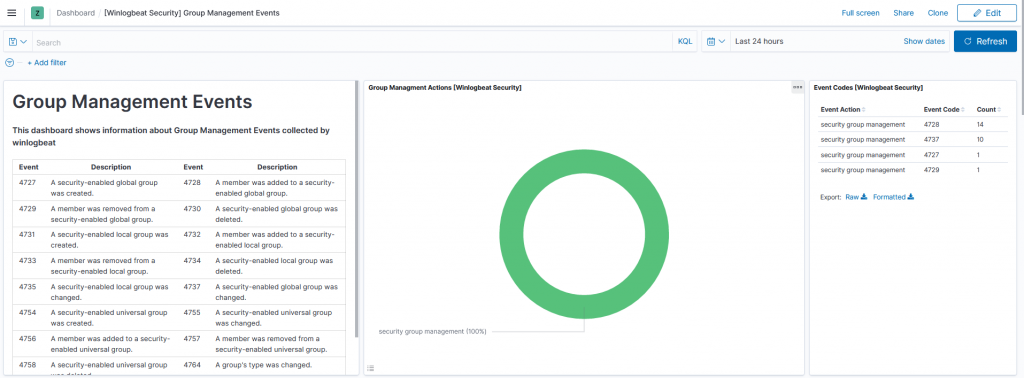
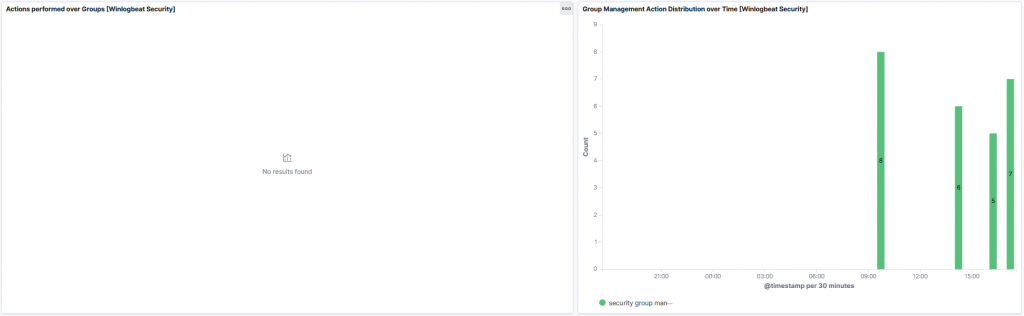
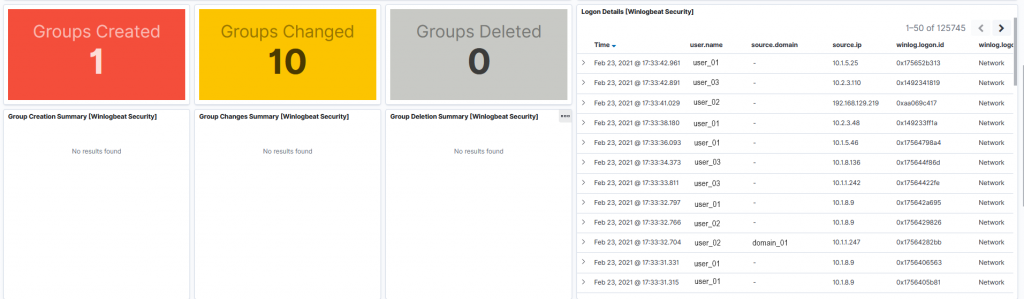
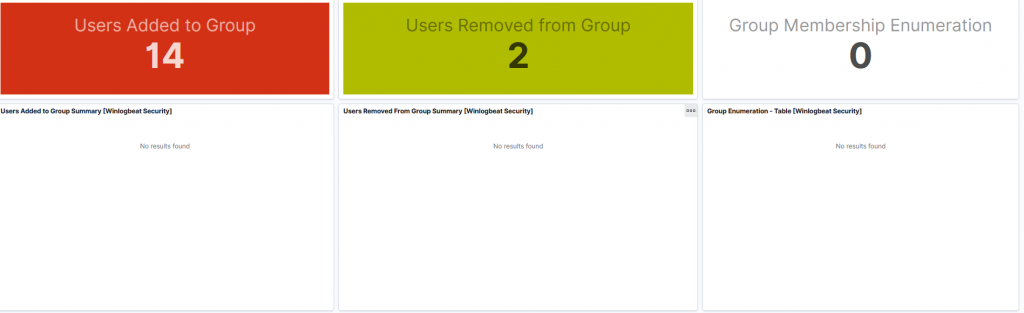
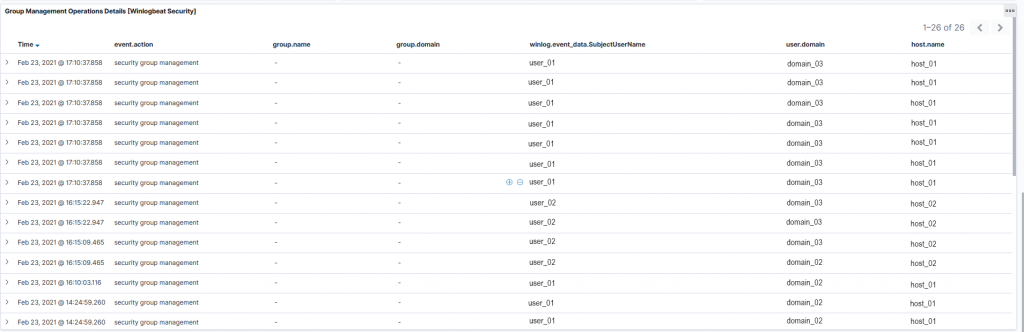
As you can see, we collect information related to the following security KPIs
- Groups Created
- Groups Changed
- Groups Deleted
- Users Added to Group
- Users Removed from Group
- Group Membership Enumeration
Some of our customers are already using this dashboard – we hope it will be useful not just to them and our other customers, but to everyone.

Franco Federico
Hi, I’m Franco and I was born in Monza. For 20 years I worked for IBM in various roles. I started as a customer service representative (help desk operator), then I was promoted to Windows expert. In 2004 I changed again and was promoted to consultant, business analyst, then Java developer, and finally technical support and system integrator for Enterprise Content Management (FileNet). Several years ago I became fascinated by the Open Source world, the GNU\Linux operating system, and security in general. So for 4 years during my free time I studied security systems and computer networks in order to extend my knowledge. I came across several open source technologies including the Elastic stack (formerly ELK), and started to explore them and other similar ones like Grafana, Greylog, Snort, Grok, etc. I like to script in Python, too. Then I started to work in Würth Phoenix like consultant. Two years ago I moved with my family in Berlin to work for a startup in fintech(Nuri), but the startup went bankrupt due to insolvency. No problem, Berlin offered many other opportunities and I started working for Helios IT Service as an infrastructure monitoring expert with Icinga and Elastic, but after another year I preferred to return to Italy for various reasons that we can go into in person 🙂 In my free time I continue to dedicate myself to my family(especially my daughter) and I like walking, reading, dancing and making pizza for friends and relatives.
Author

Latest posts by Franco Federico
10. 06. 2026
Unified Monitoring
Transform Metrics into Alerts
10. 03. 2026
Unified Monitoring
Elastic AutoOps in NetEye: Simplifying Elasticsearch Operations with Real-Time Intelligence
09. 09. 2025
NetEye
Backing up a MariaDB Galera Cluster