
28. 09. 2018
Franco Federico
Asset Management, NetEye
How to Change the Default Language in OCS Inventory
OCS Inventory is part of our Asset Management module integrated into NetEye. Open Computer and Software Inventory Next Generation (OCS Inventory NG) is free software that enables users to inventory IT assets. OCS-NG collects information about the hardware and software of networked machines from the machines themselves running the OCS client program (“OCS Inventory Agent”). OCS can then visualize the inventory through a web interface. In addition, OCS can deploy applications on computers according to search criteria. The agent-side IpDiscover tool makes it possible to discover the entirety of networked computers and devices. GLPI is the other component of the Asset Management module, and is connected to OCS Inventory via a plug-in.
Many clients ask us how they can change the default language in OCS Inventory since it supports multiple languages. In the open source world, the community translates the user guide and GUI labels from English to another language. This activity is very simple, below how to do it.
When you log on to NetEye 3.14 (the latest release), you will see:
Select OCS Inventory from the menu on the left. You should see the OCS interface:
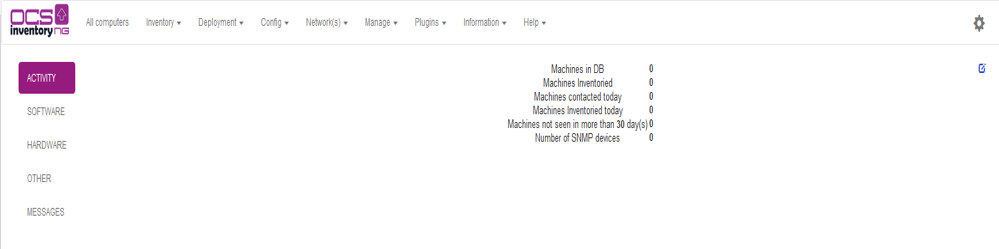
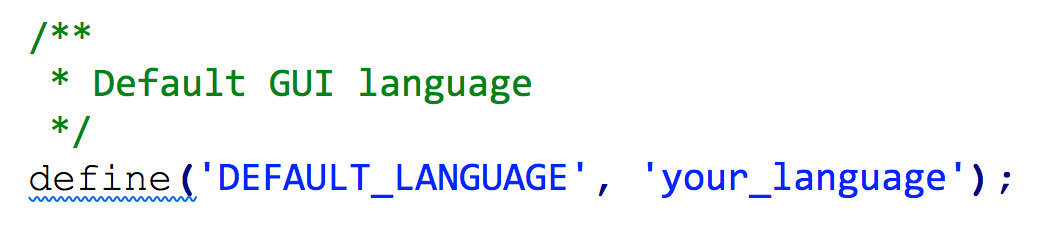
This is the result for the default language (English). On the NetEye server, edit the file /var/lib/neteye/ocsng/ocsinventory-reports/ocsreports/var.php in order to change the default value to another. Find the following section in that file:
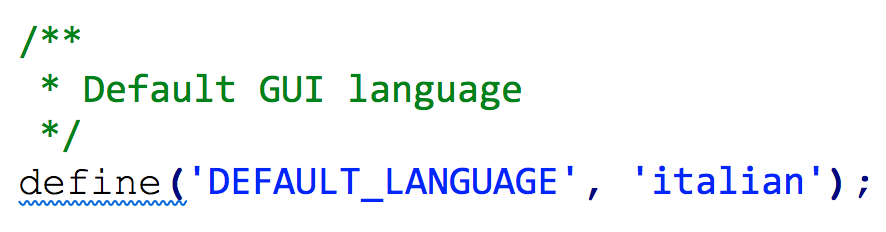
and change it to one of the supported languages (for example, Italian):
Save the file, reopen the browser, and refresh the page:
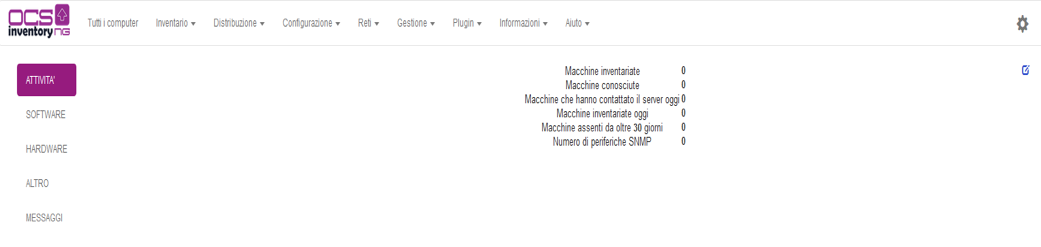
The supported languages are:
- French
- English
- German
- Spanish
- Italian
- Brazilian Portuguese
- Polish
- Hungarian
- Portuguese
- Russian
- Slovenian
- Turkish
- Japanese
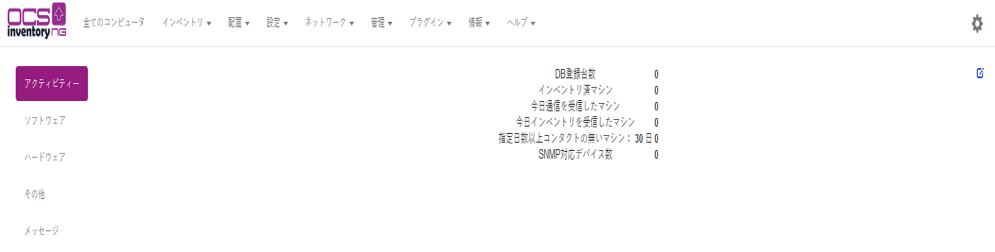
Here’s a final example with Japanese:


Franco Federico
Hi, I’m Franco and I was born in Monza. For 20 years I worked for IBM in various roles. I started as a customer service representative (help desk operator), then I was promoted to Windows expert. In 2004 I changed again and was promoted to consultant, business analyst, then Java developer, and finally technical support and system integrator for Enterprise Content Management (FileNet). Several years ago I became fascinated by the Open Source world, the GNU\Linux operating system, and security in general. So for 4 years during my free time I studied security systems and computer networks in order to extend my knowledge. I came across several open source technologies including the Elastic stack (formerly ELK), and started to explore them and other similar ones like Grafana, Greylog, Snort, Grok, etc. I like to script in Python, too. Then I started to work in Würth Phoenix like consultant. Two years ago I moved with my family in Berlin to work for a startup in fintech(Nuri), but the startup went bankrupt due to insolvency. No problem, Berlin offered many other opportunities and I started working for Helios IT Service as an infrastructure monitoring expert with Icinga and Elastic, but after another year I preferred to return to Italy for various reasons that we can go into in person 🙂 In my free time I continue to dedicate myself to my family(especially my daughter) and I like walking, reading, dancing and making pizza for friends and relatives.
Author

Latest posts by Franco Federico
10. 03. 2026
Unified Monitoring
Elastic AutoOps in NetEye: Simplifying Elasticsearch Operations with Real-Time Intelligence
09. 09. 2025
NetEye
Backing up a MariaDB Galera Cluster
12. 06. 2025
NetEye, Unified Monitoring
From Monitoring to SOC
17. 02. 2025
Unified Monitoring
Monitoring Printer Logs