30. 06. 2026
Azure, Cloud, Microsoft, NetEye, NetEye Extension Packs, Unified Monitoring

Il nuovo Shutdown Management tool, disponibile con il rilascio della versione di NetEye 3.5 sta riscuotendo un buon succcesso tra gli utenti, tanto che sempre più aziende ne utilizzano le funzionalità.
Con questo strumento, potete infatti iniziare una procedura di spegnimento del vostro datacenter in automatico nel caso alcuni valori soglia vengano oltrepassati.
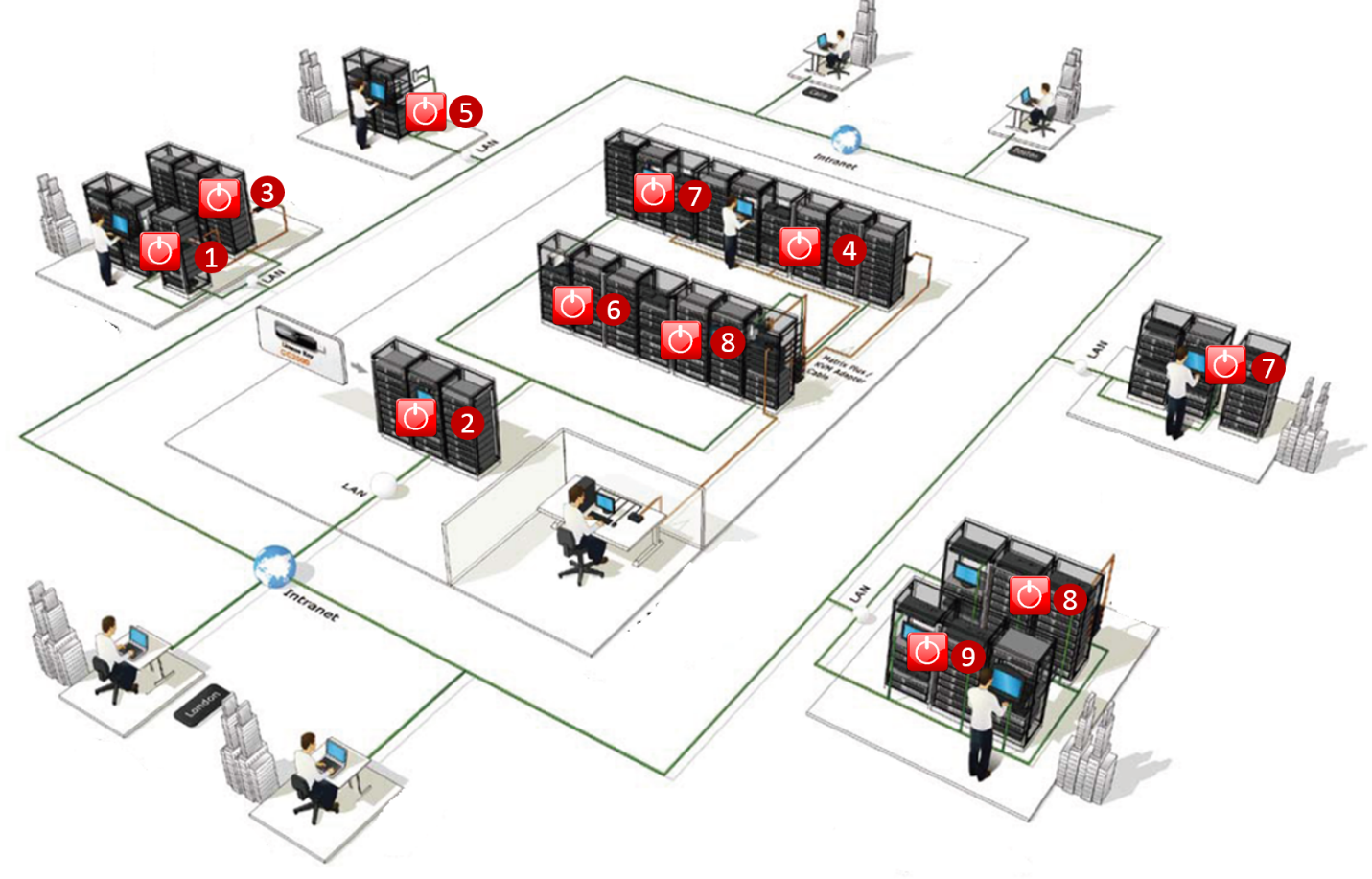
Utilizzando i controlli ambientali di NetEye esistenti, come i sensori per il fumo, temperatura o umidità collocati nel DC, avete la possibilità di innescare uno shutdown predefinito con una certa sequenza logica.
Lo strumento infatti è in grado di interagire con i sistemi per eseguire il loro spegnimento. In questo modo, potrete implementare in breve tempo soluzioni di shutdown, come nel caso abbiate la necessità di eseguire un power off su sistemi Windows o Linux. Inoltre, lo Shutdown Management può gestire l’arresto di tutte le virtual machines su un’infrastruttura VMware ESX e alla fine spegnere anche se stesso.
Comunque esistono alcuni altri casi particolari in cui è possibile utilizzare la procedura di shutdown come nel caso di storage o firewalls. In questi casi è sufficiente utilizzare diverse interfacce dello Shutdown Management tool per spegnere i sistemi di storage EMC, IBM e HP e i vari firewalls.
Infine, il modulo offre anche la possibilità di decidere l’ordine sequenziale di come eseguire lo spegnimento e il tempo di tolleranza che deve trascorrere prima di innescare l’intero processo.
Interessante è anche la possibilità di attivare un bottone direttamente sul modulo di Shutdown Management per forzare l’esecuzione dello spegnimento dell’intero datacenter. In questo modo, non è più necessario che un amministratore di sistema sia presente per eseguire la procedura ma può avvenire in automatico.

Tobias Goller
NetEye Solution Architect at Würth IT Italy
I started my professional career as a system administrator.
Over the years, my area of responsibility changed from administrative work to the architectural planning of systems.
During my activities at Würth IT Italy, the focus of my area of responsibility changed to the installation and consulting of the IT system management solution WÜRTHPHOENIX NetEye.
In the meantime, I take care of the implementation and planning of customer projects in the area of our unified monitoring solution.
Author

Latest posts by Tobias Goller
16. 02. 2026
Unified Monitoring
OpenShift Monitoring in NetEye
13. 10. 2025
Log-SIEM, Unified Monitoring
Elastic Defend: Experiences
18. 07. 2025
Automation, Cloud
Running SOS Berlin JobScheduler in Containers: A Step Toward Cloud-Native Scheduling