
06. 11. 2013
Arianna Cunaccia
NetEye, Real User Experience Monitoring
NetEye at the Open Source Conference in Milan
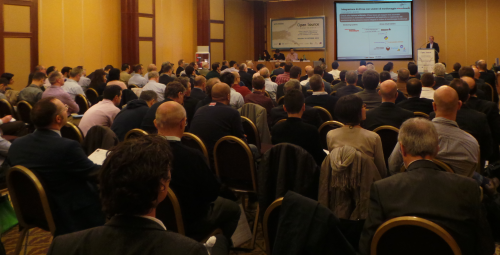
Georg Kostner itroduces the latest NetEye enhancements at the Open Source Conference in Milan
Georg last week presented its enhanced IT Service Management offer with NetEye at the yearly Open Source Conference in Milan. The breakout session pointed out the advantages in implementing NetEye for the Network Traffic Monitoring and focused also on Al´exa. Al’exa, which has recently been integrated in the NetEye offer simulates the end user behavior to control the availability and reliability of all IT services. With this recent enhancement NetEye allows to identify also on outsourced services which applications are consuming which bandwidth and could be the cause for possible performance losses.
Luca Deri, ntop founder, showed the main features offered by its solution, integrated with NetEye. The network monitoring with ntop allows users to improve their network visibility, extending the standard metrics (i.e., packets, bytes) and analyzing in more detail the protocols used in the network (i.e., email, VoIP, Citrix / RDC).


Arianna Cunaccia
Author

Latest posts by Arianna Cunaccia
27. 10. 2020
Events
NetEye User Group 2020
27. 10. 2020
Webinar
Cyber Security with ntopng and nScrub